Whether you are an IT Administrator, Virtual Infrastructure Engineer, or an avid Home Lab enthusiast, one of the biggest time sinks we face is building, configuring and updating new servers.
There are many tools such as Ansible, Puppet and Windows DSC which administrators can use to configure servers once deployed, but getting a server to the point where it is ready for such tools to take over can take some time and effort.
These guides will provide methods and scripts which you can use to create preconfigured, ready-to-use server templates which can be deployed for production or personal use.
My goal is both to help readers create streamlined templates which are easy to use, lightweight (low CPU/RAM/storage requirements) and feature-rich, as well as to demystify the process of creating VM templates.
Disclaimer: I am happy to field questions, but offer no warranty or professional support for projects posted here. Posted projects use standard, non-proprietary methods available from respective OS vendors, package maintainers and distribution authors. Issues should be brought to attention of those entities as appropriate.
Following my previous Debian 11 Template post – We will be using a similar procedure to create an Ubuntu 20.04 LTS Template. This guide will be updated to Ubuntu 22.04 LTS after it is released later this year.
You can use a standalone ESXi host, or vCenter server to complete this guide. We will be using vCenter for our example screenshots. This guide is written based on ESXi/vCenter 7.0, but should work on all other supported releases (6.5/6.7). You could also use the popular Windows/MacOS based VMware Workstation/VMware Player to follow these instructions with some adaptation, but this guide will focus on ESXi/vCenter.
Prerequisites
VMware ESXi Host (with or without vCenter) with at least 2 GB RAM and 35 GB storage free
* Ubuntu Server 20.04.3 is the current build of Ubuntu 20.04 LTS at time of writing. The revision number (.3) may change in a future release
Create the Virtual Machine (VM)
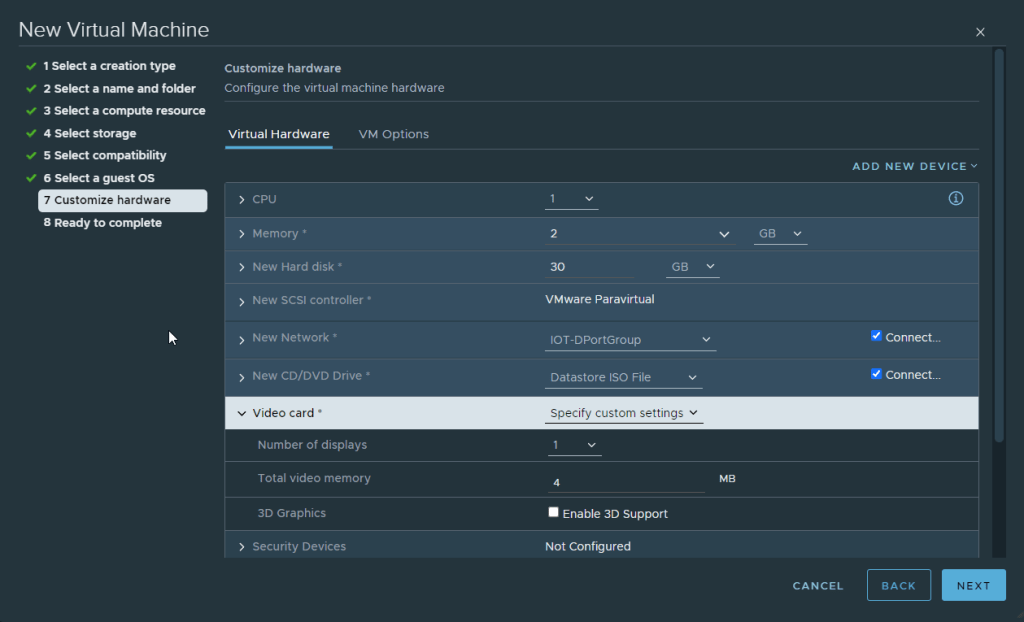
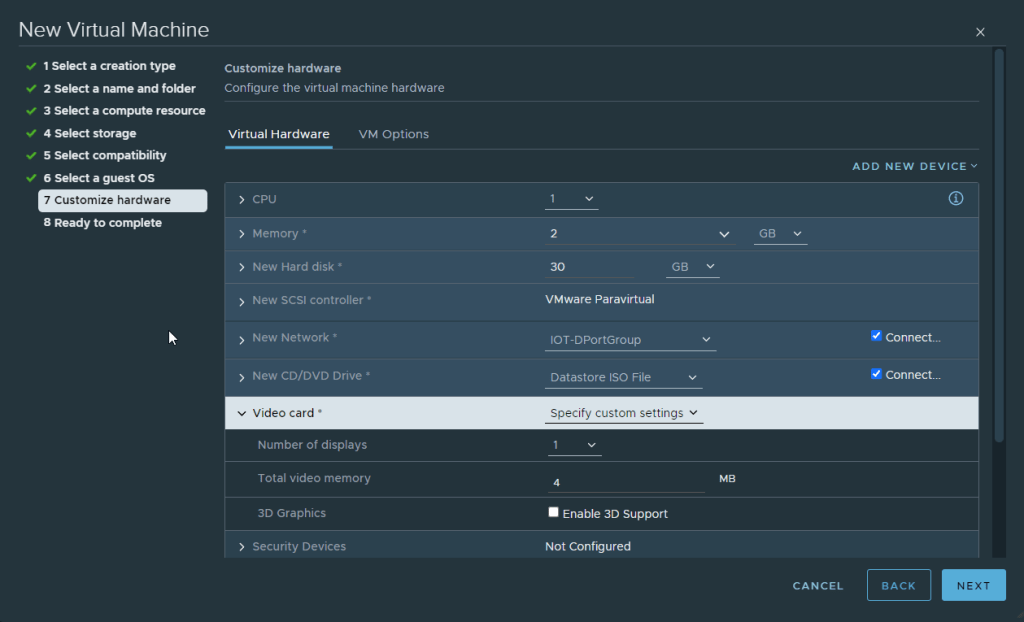
VM Specifications Screen
Log in to your vCenter or ESXi host
Upload the Ubuntu 20.04 ISO to a datastore on your host
Create a new VM with the following specifications:
Virtual machine name: Ubuntu20.04-Template
Guest OS Family: Linux
Guest OS Version: Ubuntu Linux (64-bit)
1 CPU
2 GB Memory
30 GB Hard Disk (Thin Provision)*
SCSI Controller: VMware Paravirtual**
Network: Any port group with internet connectivity (preferably DHCP enabled)
Video card: Default settings -or- see below for hi-res displays***
CD/DVD drive: Select “Datastore ISO File” – browse to Ubuntu 20.04 ISO uploaded previously and tick the box for “Connected”
Note: The above CPU/Memory/Hard Disk are a recommended minimum. You may choose to increase (or decrease) these as you see fit in your template based on your environment’s needs/resource constraints.
* Thin provisioning is not the default (Except in NFS storage) and must be selected manually by expanding “Hard Disk 1” and using the dropdown menu ** Expand “New SCSI controller” and use the dropdown menu to change type to Paravirtual *** 4 MB video memory allows for resolutions up to 1360×768 which is enough for most use cases. If you want to use a GUI with high resolution you can increase this to 8 MB (resolutions up to 1600×1200), 16 MB (resolutions up to 2560×1600) or higher.
Configure the VM
Step-By-Step Screenshots of Install Process
Power on the VM and connect to Console
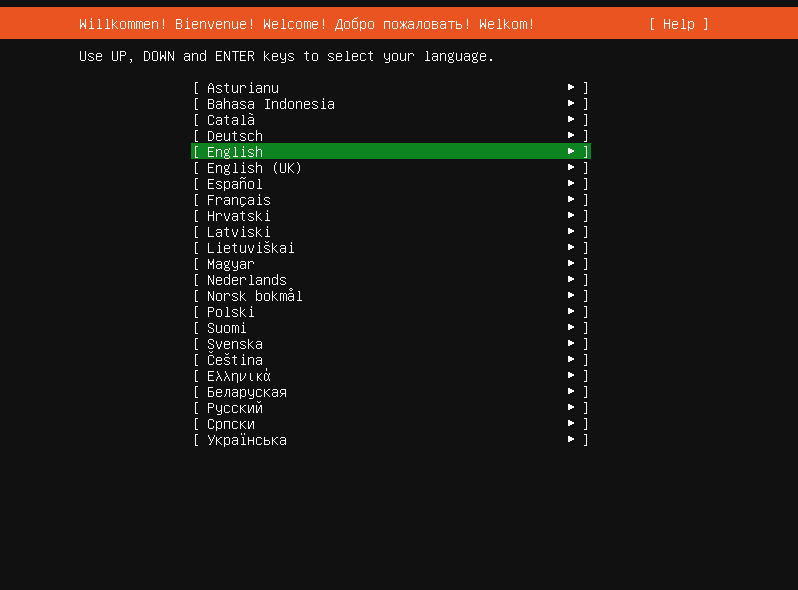
Select English (or your language of choice)
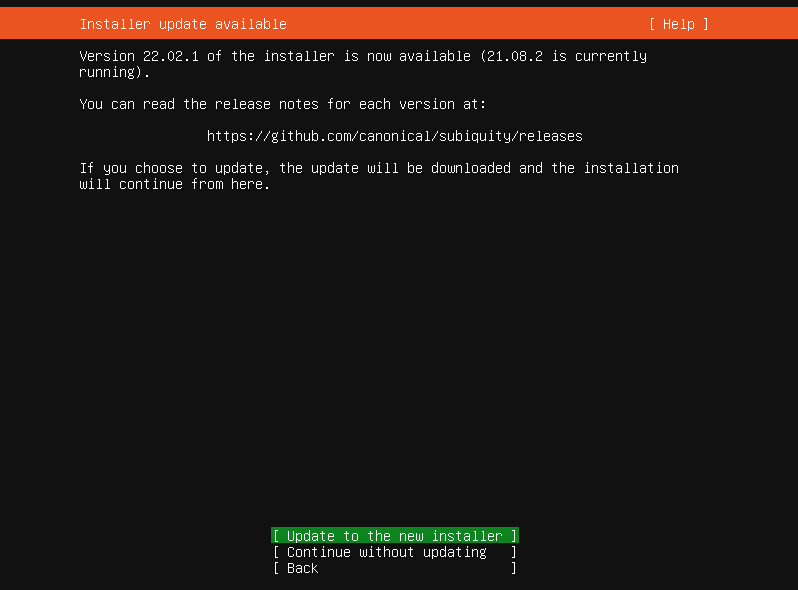
Select “Update to the new installer” if this screen appears
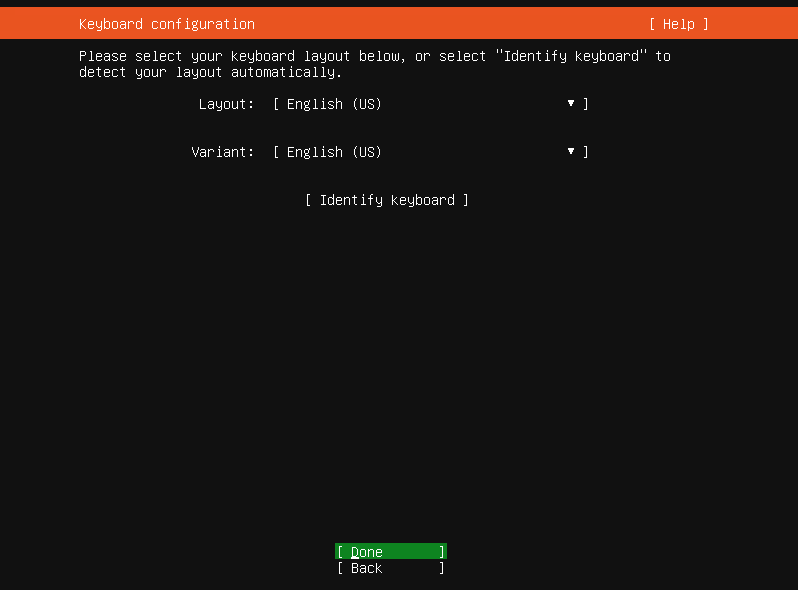
Select “Done” to accept default or change keyboard layout/variant to match your region
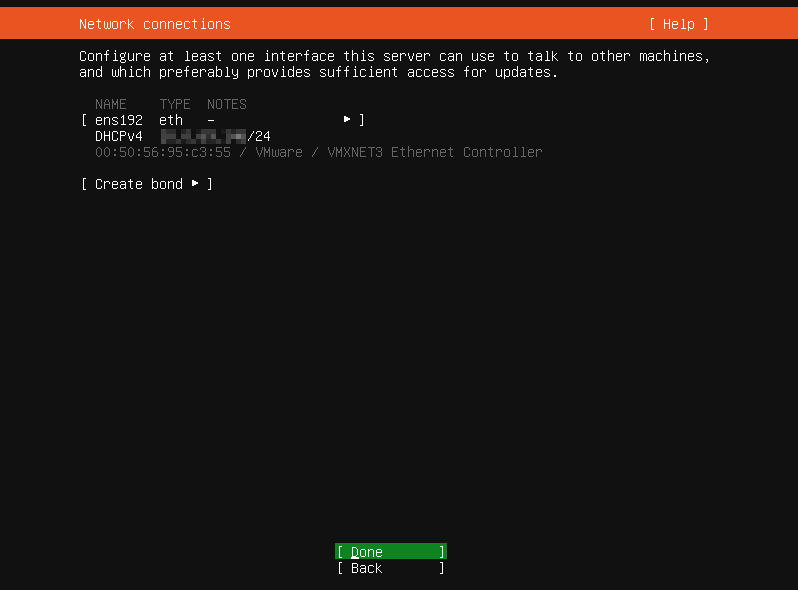
Select “Done” if using DHCP and an IP address is successfully displayed above
If DHCP not available:
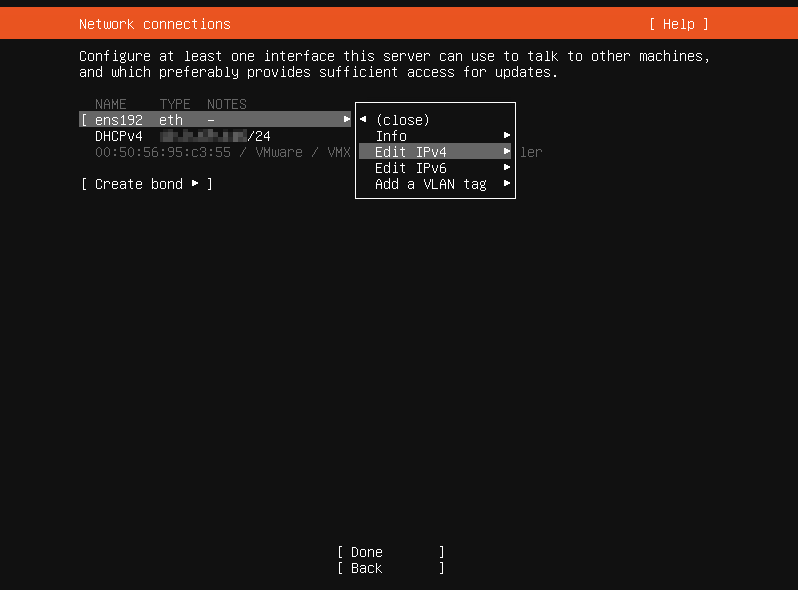
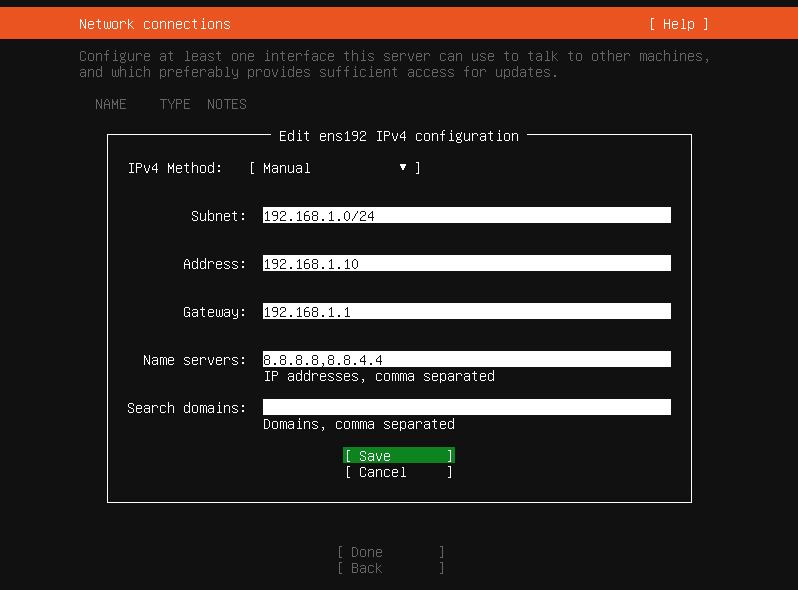
Select “ens192” -> Edit IPv4 and change dropdown to “Manual”
Enter desired subnet in CIDR format (Ex: 192.168.1.0/24)
Enter desired IP address
Enter gateway
Enter DNS servers (Comma separated format – Ex: 8.8.8.8,8.8.4.4)
Select “Save” -> “Done”
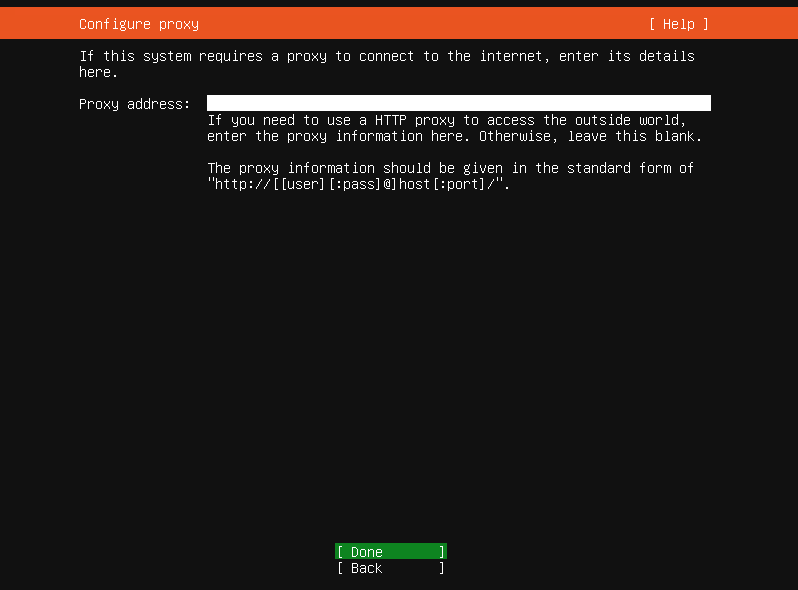
Select “Done” to skip adding a proxy server (Unless your network requires it)
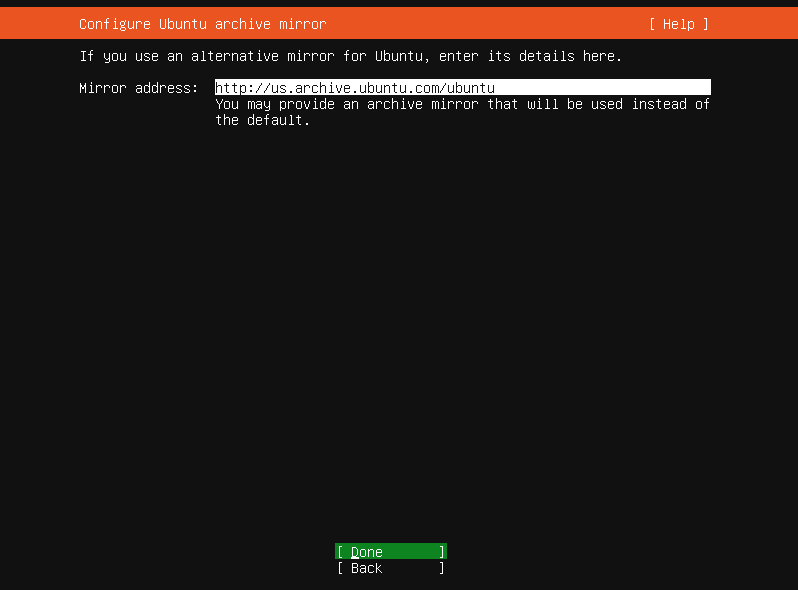
Select “Done” to accept default mirror
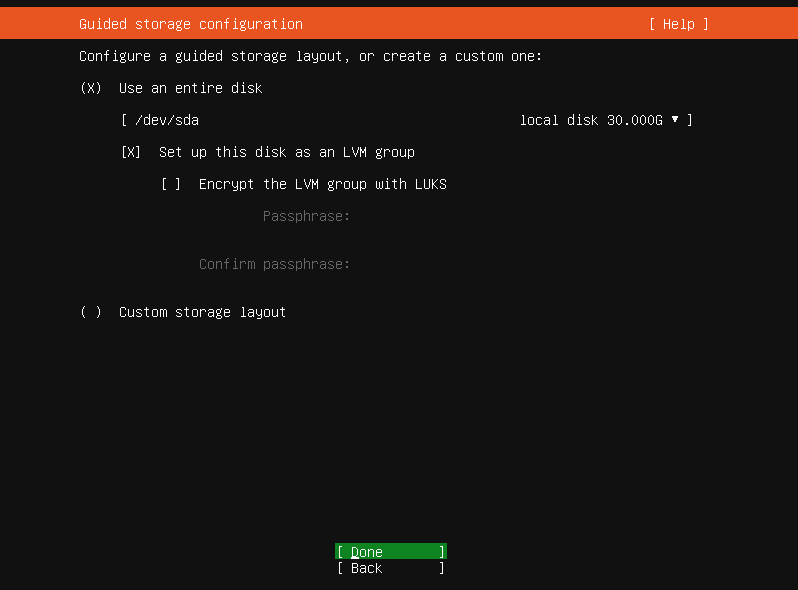
Select “Done” to accept default storage layout
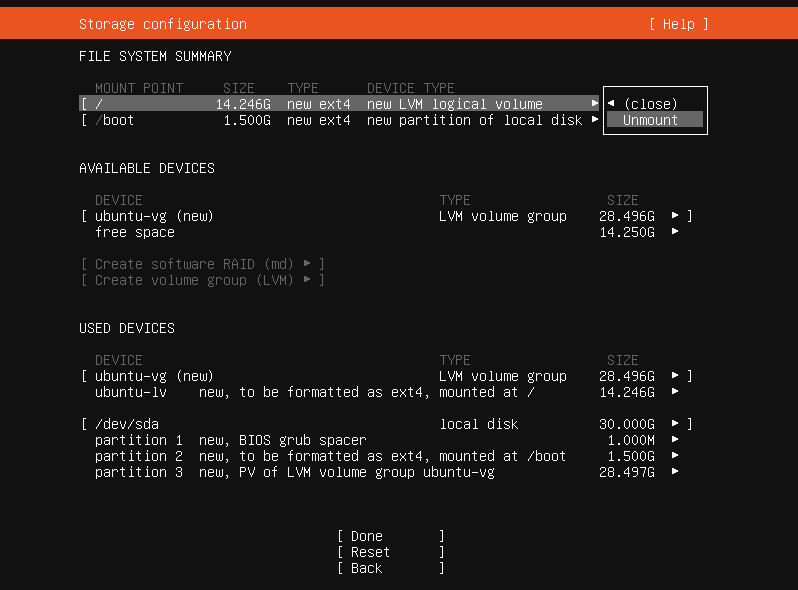
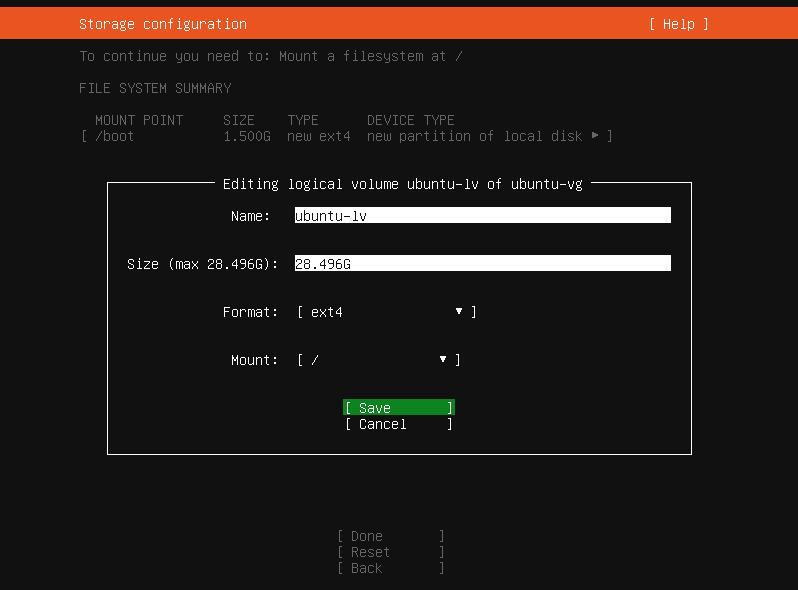
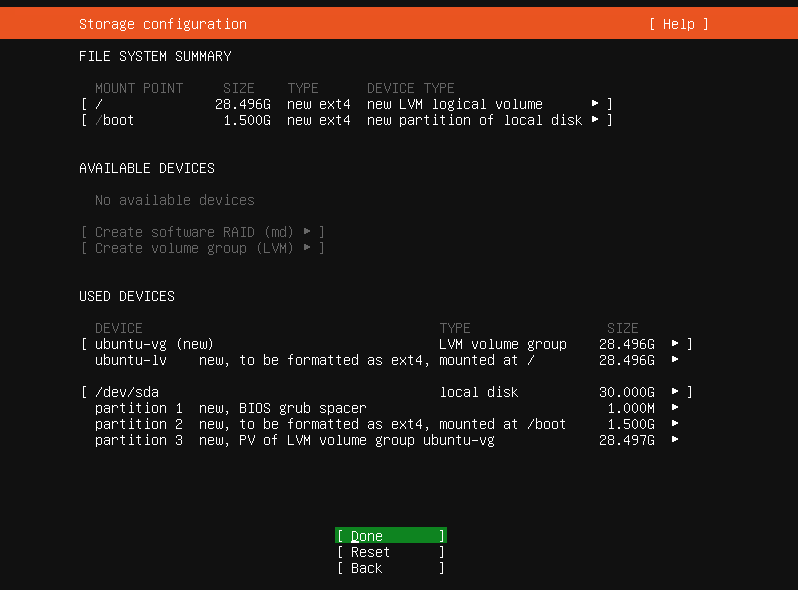
On the Storage Configuration screen:
Select the “/” mount point and then “Unmount”
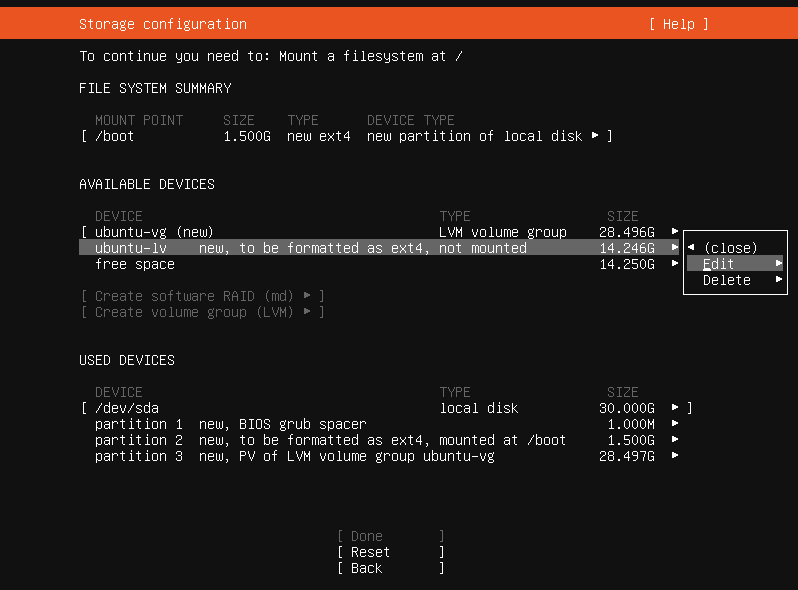
Select “ubuntu-lv” and then “Edit”
Change Size to 28.496G (Or the listed max if you gave your template more than 30GB)
Change Mount dropdown to “/”
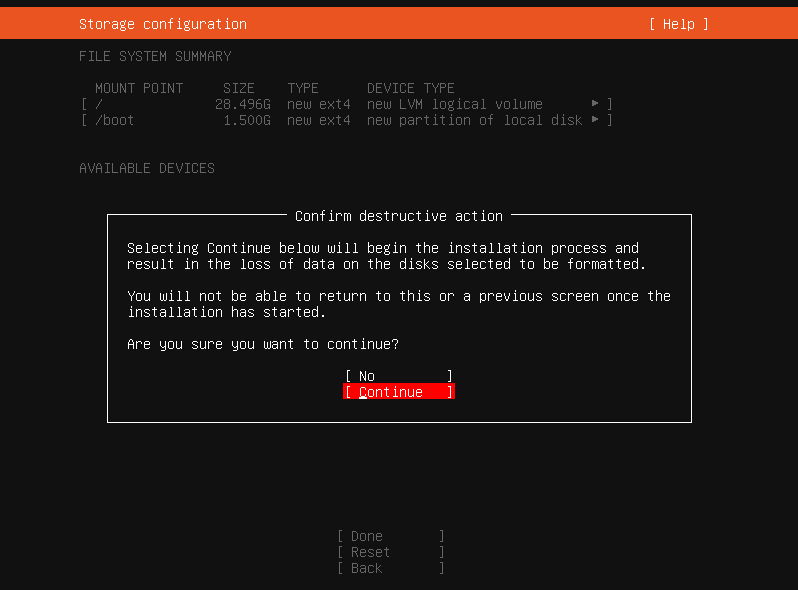
Select “Save” -> “Done” -> “Continue”
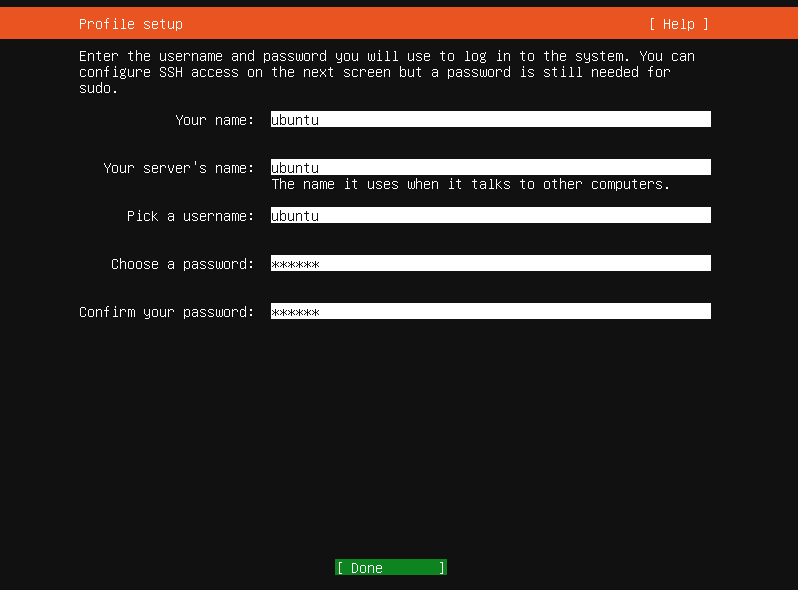
On the “Profile setup” screen enter the following:
Your name: ubuntu
Server name: localhost
Username: ubuntu
Password: ubuntu
Select “Done”
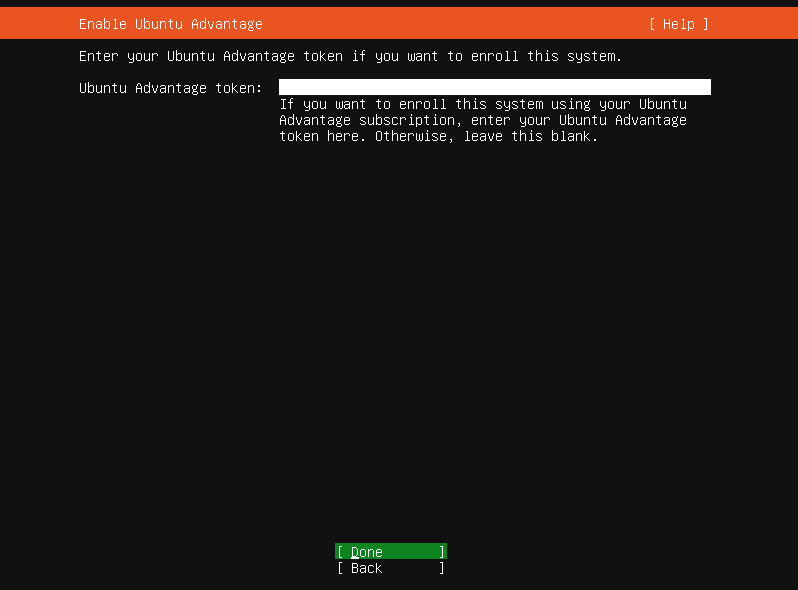
Select “Done” to skip adding an Ubuntu Advantage token (unless you have one)
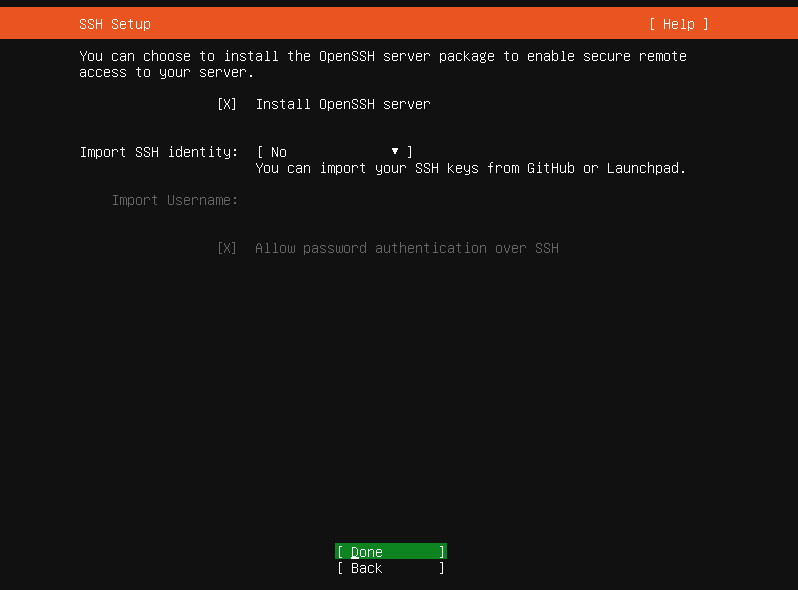
Tick the box to Install OpenSSH server and select “Done”
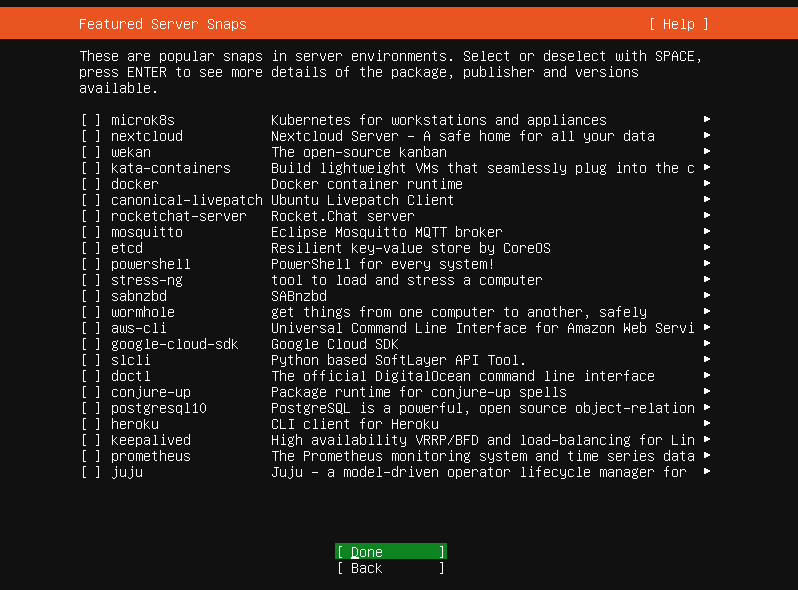
Select “Done” to skip all optional packages
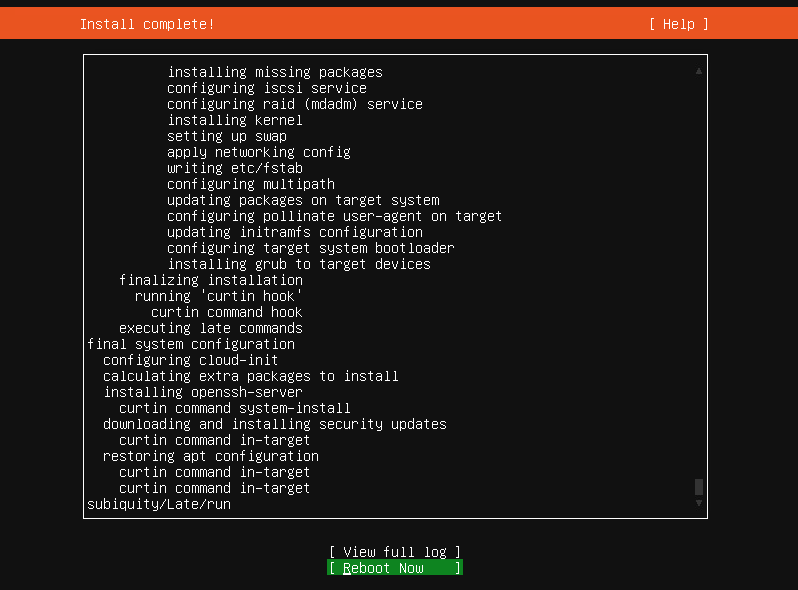
Wait for update process to finish (“Cancel update and reboot” changes to “Reboot now”)
Select “Reboot Now”
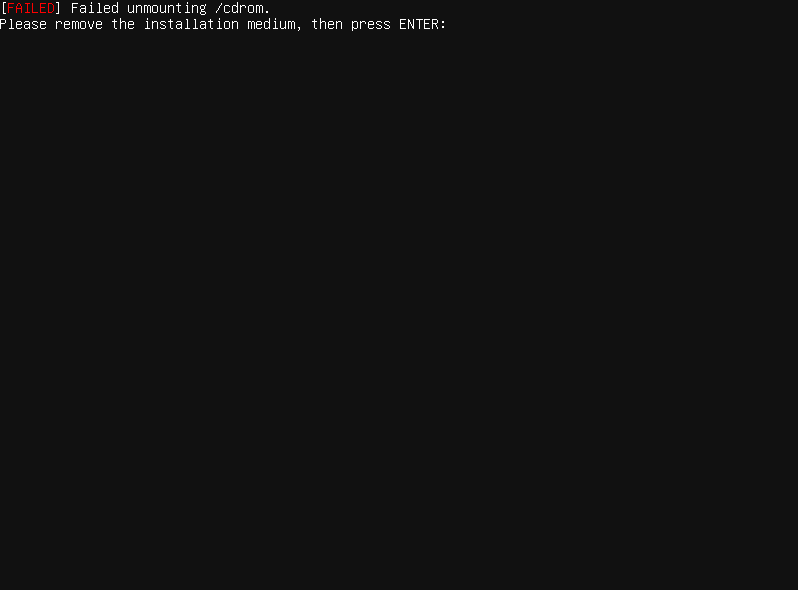
When asked to remove installation medium, return to vCenter and change the CD/DVD drive of the VM back to “Client Device”
Return to the VM console and press Enter to reboot
Update and Generalize the VM
Ubuntu 20.04 LTS is now installed on your Virtual Machine.
After a few moments the system will start up and prompt you for a username and password – use the credentials we set up during install (user: ubuntu / pass: ubuntu)*
* If you do not see the login screen immediately, try logging in by typing ubuntu twice (pressing enter after each) as the screen may simply have failed to clear after first-time setup. If this does not work, the screen should clear afterward and show you a login prompt
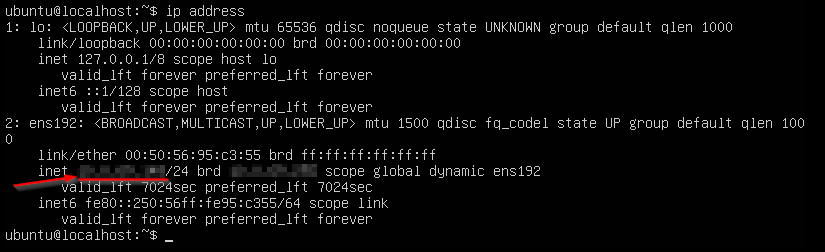
Run this command to get your server’s IP address:
ip address
Output of “ip address” command
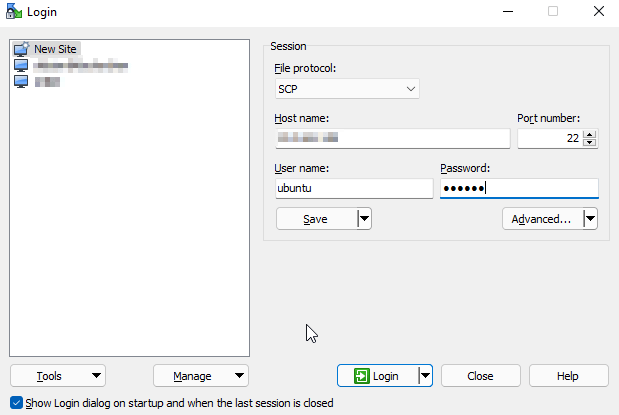
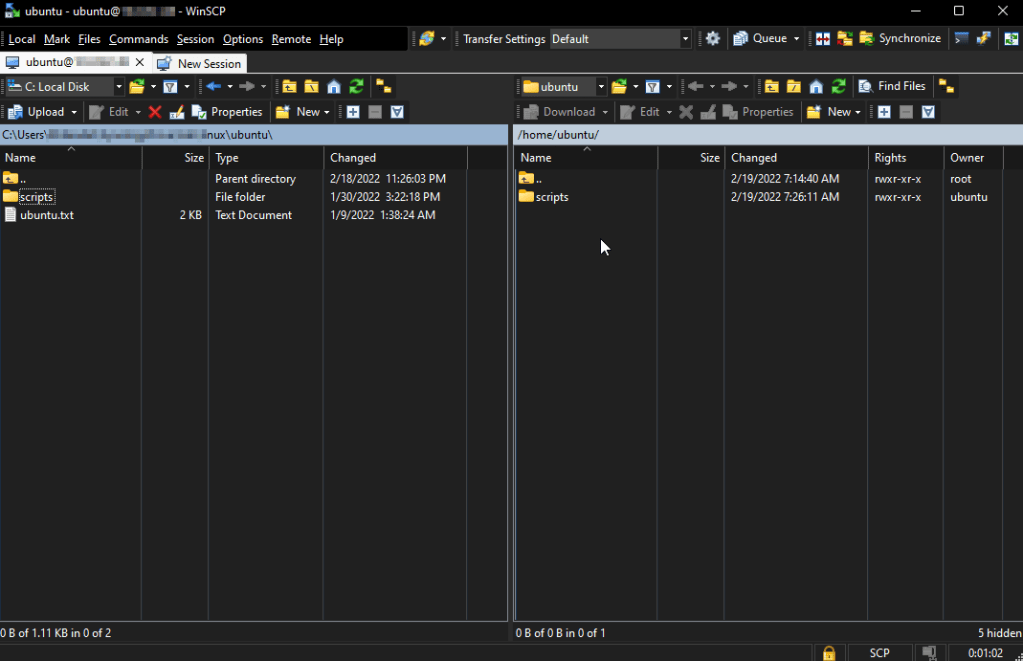
Open your SCP client (I am using WinSCP) and enter the following:
Host name: IP Address obtained above
User name: ubuntu
Password: ubuntu
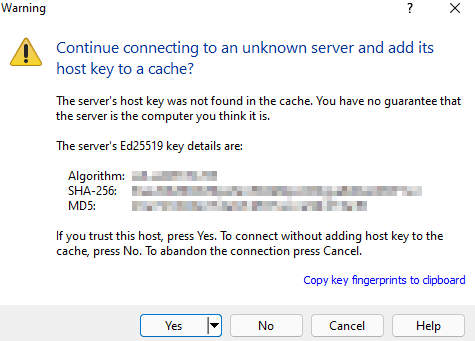
Select “Yes” when prompted to accept the host key
Screenshots of SCP Process
Download and unzip the “scripts” folder to your computer from the following link:
Disclaimer: These scripts are not meant to be run on existing Linux installations and may have unpredictable or undesirable behavior in those environments. Scripts are provided as-is with no implied warranty. As with any script or automation, it is recommended you review the contents and familiarize yourself with what each script does. There is also an outline of the functions of each script included in the “Extras” section below.
Use SCP to transfer the “scripts” folder to the home directory on your VM (/home/ubuntu)
The scripts folder contains 4 files:
readme.txt
ubuntu-prep.sh
gui-ubuntu-prep.sh
updates.sh
readme.txt (cat ~/scripts/readme.txt) provides descriptions and instructions for updates.sh and gui-ubuntu-prep.sh
ubuntu-prep.sh is the first script we will run and prepares the VM to be used as a template.
gui-ubuntu-prep.sh is an optional script which installs a Desktop Environment/GUI (Graphical User Interface) it should only be run *after* deployment, not as part of templating
updates.sh updates the server operating system and installed packages
Return to the VM console and run the following commands:
Adds VMware-specific multi-pathing fix to prevent erroneous system log entries
Installs updates and basic packages
Clears Machine-ID to be regenerated at next boot**
Clears DHCP info
Sets default user (ubuntu) password to expired***
Clears command history
Shuts down VM to complete templating process
* Cloud-init can be used to automatically configure Linux in hosted/development environments but is generally not necessary for most use cases ** Machine-ID is generated if missing at boot. This should be unique for each VM, and must be cleared again (Re-Generalize instructions below) if template is booted up for future updates *** At first boot, user “ubuntu” will need to set a new password. This is forced for security purposes
What does gui-ubuntu-prep.sh do?
Updates the operating system and packages
Installs Xubuntu (Xfce4) desktop environment and additional plugins
Installs graphical text editor (Geany) and web browser (Firefox)
Removes unnecessary packages
Removes unnecessary icons from panel (taskbar)
Self-deletes and reboots server to complete install
How to Re-Generalize the Template
If you need to boot the template to perform updates or make other changes, you will need to Re-Generalize to prevent Machine-ID overlaps and remove any sensitive command history. Once you are finished with your changes run the following commands before converting back to template:
Creating a VMware Virtual Machine (VM) template using Debian 11 “Bullseye”
You can use a standalone ESXi host, or vCenter server to complete this guide. We will be using vCenter for our example screenshots. This guide is written based on ESXi/vCenter 7.0, but should work on all other supported releases (6.5/6.7). You could also use the popular Windows/MacOS based VMware Workstation/VMware Player to follow these instructions with some adaptation, but this guide will focus on ESXi/vCenter.
Prerequisites
VMware ESXi Host (with or without vCenter) with at least 2 GB RAM and 35 GB storage free
*NetInst CD ISO should be used over DVD. DVD ISO self-installs as a package source and must be re-mounted or manually removed from sources to update OS.
Create the Virtual Machine (VM)
VM Specifications Screen
Log in to your vCenter or ESXi host
Upload the Debian 11 ISO to a datastore on your host
Create a new VM with the following specifications:
Virtual machine name: Debian11-Template
Guest OS Family: Linux
Guest OS Version: Debian GNU/Linux 11 (64-bit)
1 CPU
2 GB Memory
30 GB Hard Disk (Thin Provision)*
SCSI Controller: VMware Paravirtual**
Network: Any port group with internet connectivity (preferably DHCP enabled)
Video card: Reduce Video Memory to 4 MB***
CD/DVD drive: Select “Datastore ISO File” – browse to Debian Netinst ISO uploaded previously and tick box for “Connected”
Note: The above CPU/Memory/Hard Disk are a recommended minimum. You may choose to increase (or decrease) these as you see fit in your template based on your environment’s needs/resource constraints.
* Thin provisioning is not the default (Except in NFS storage) and must be selected manually by expanding “Hard Disk 1” and using the dropdown menu ** This should be the default setting but included as a double-check *** 4 MB video memory allows for resolutions up to 1360×768 which is enough for most use cases. If you want to use a GUI with high resolution you can increase this to 8 MB (resolutions up to 1600×1200), 16 MB (resolutions up to 2560×1600) or higher.
Configure the VM
Step-By-Step Screenshots of Install Process
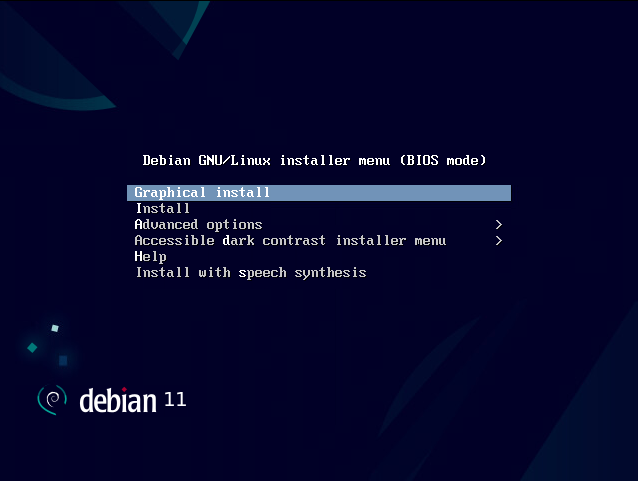
Power on the VM and connect to Console
Select Graphical Install and press Enter
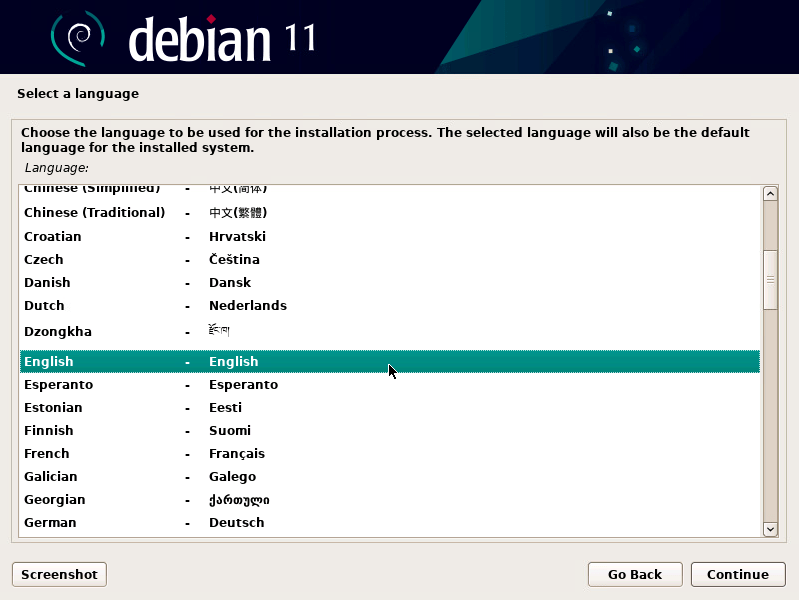
Select English (or your language)
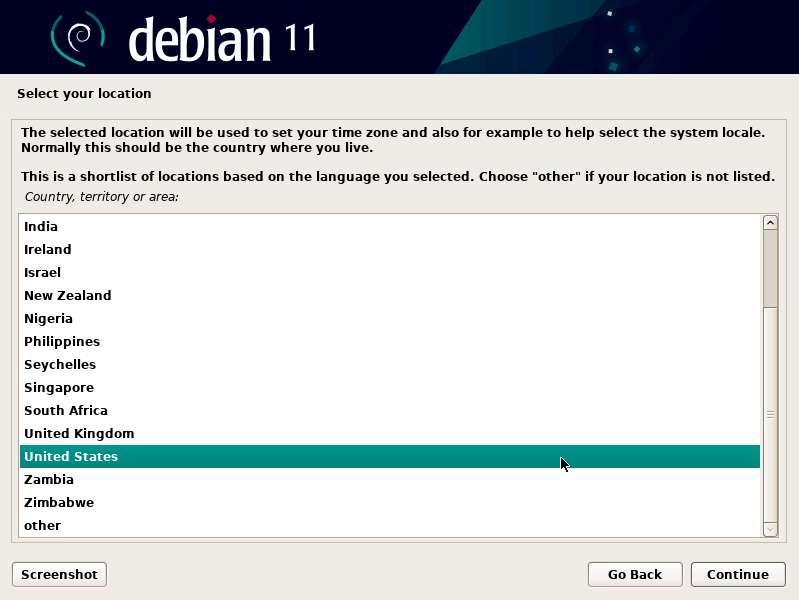
Select United States (or your region)
Select American English (or your keyboard layout)
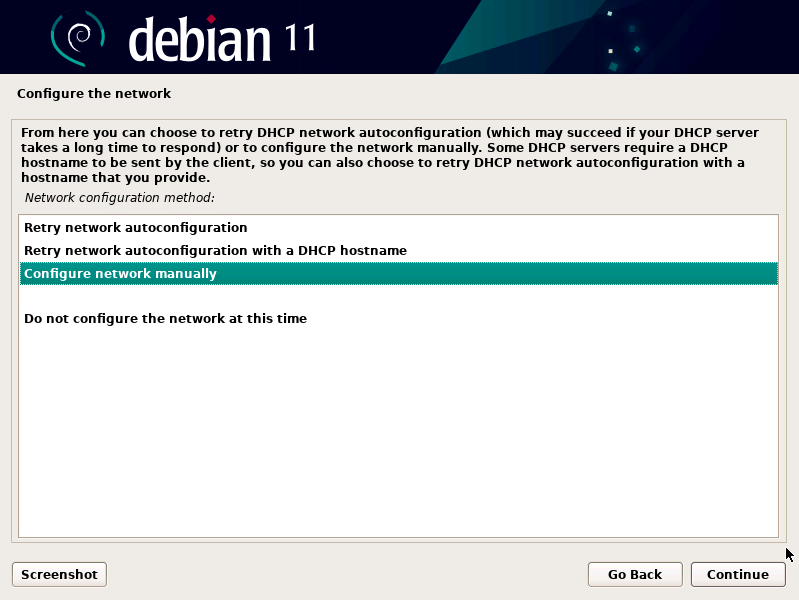
If DHCP not available:
Select “Configure Network Manually”
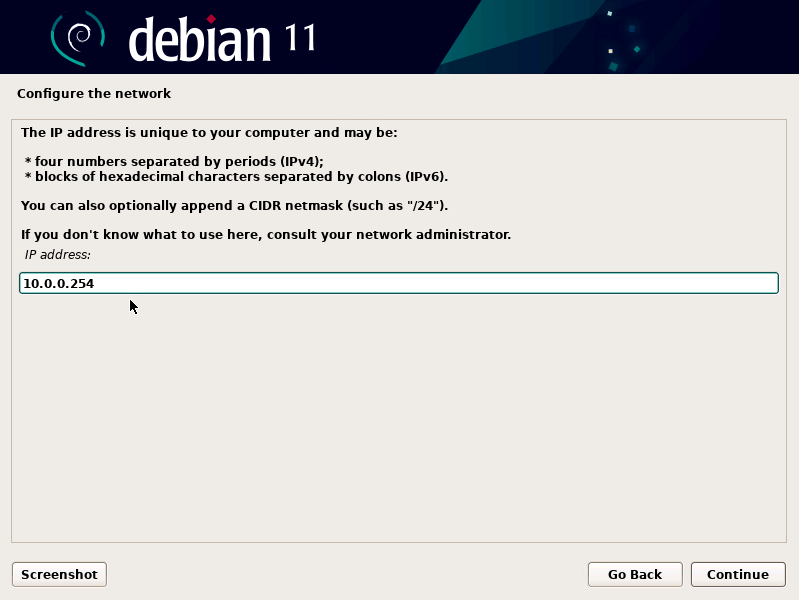
Enter desired IP address
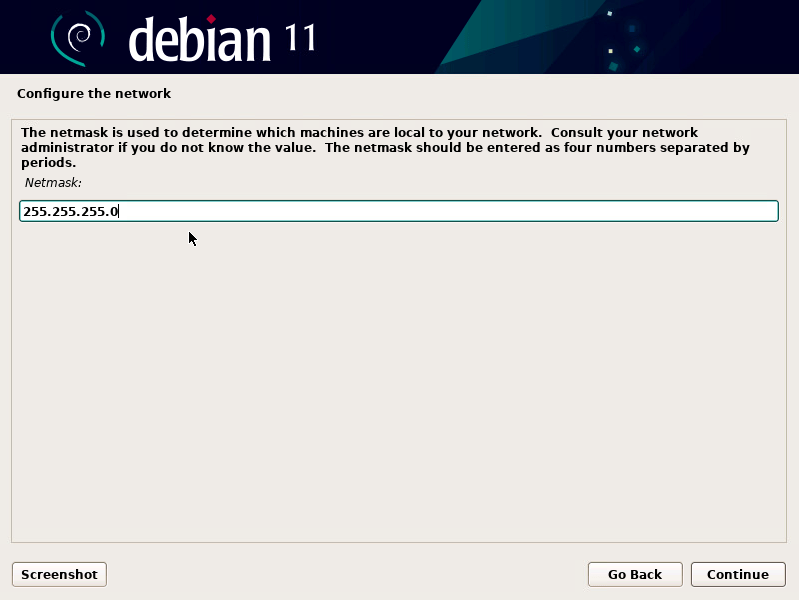
Enter netmask
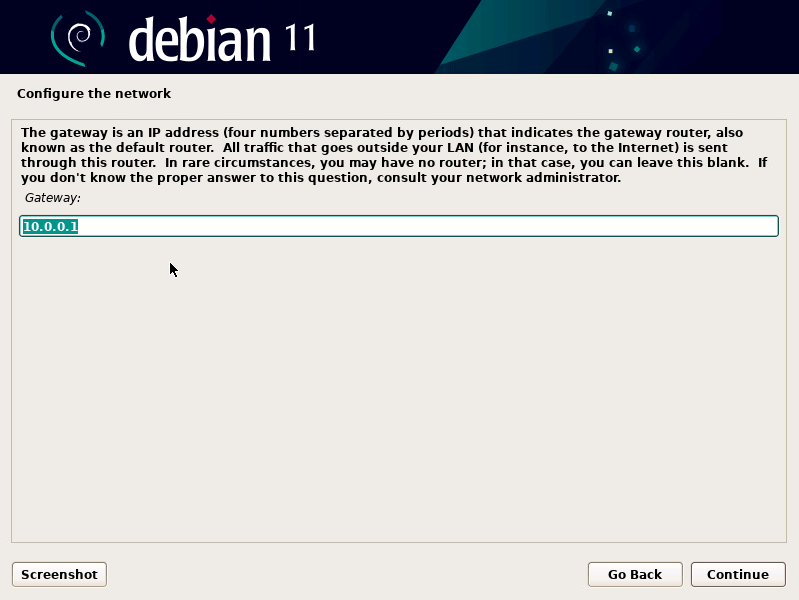
Enter gateway
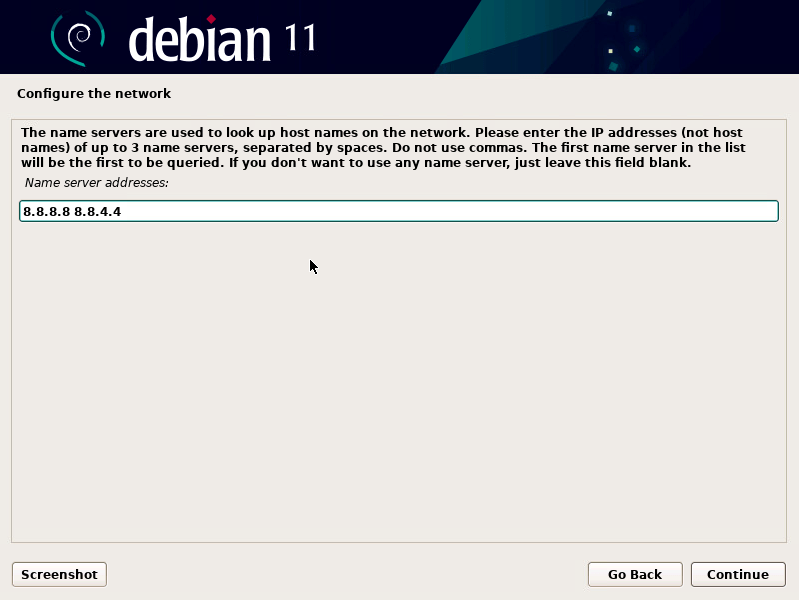
Enter DNS servers (separated by space)
Enter Hostname: localhost
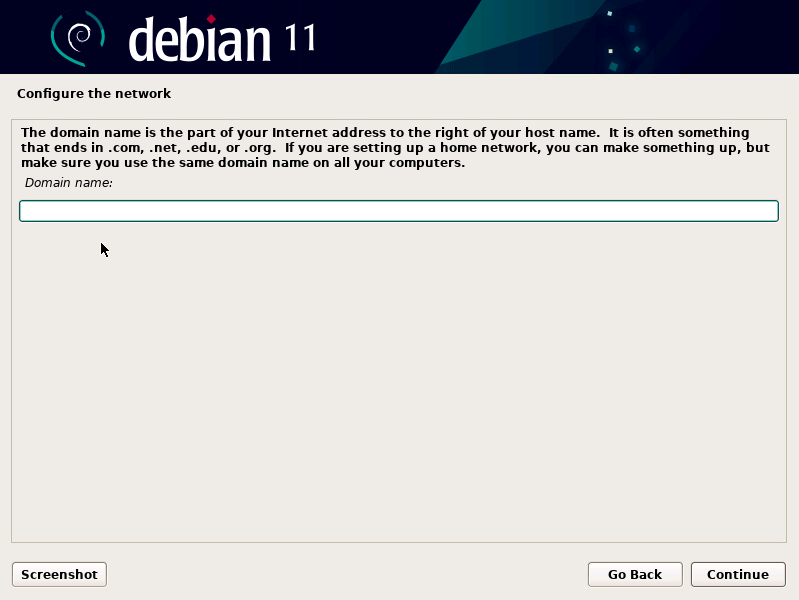
Leave Domain name blank
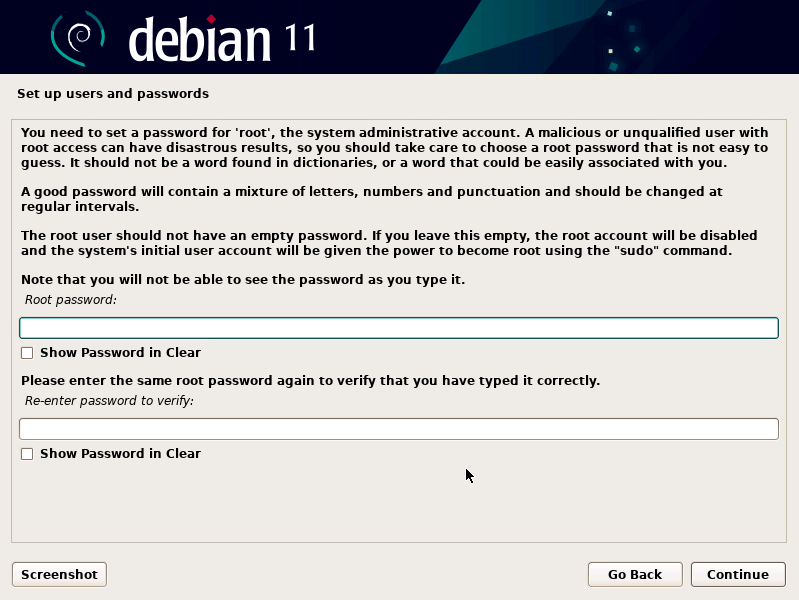
Leave Root password blank (we will be using sudo for root)
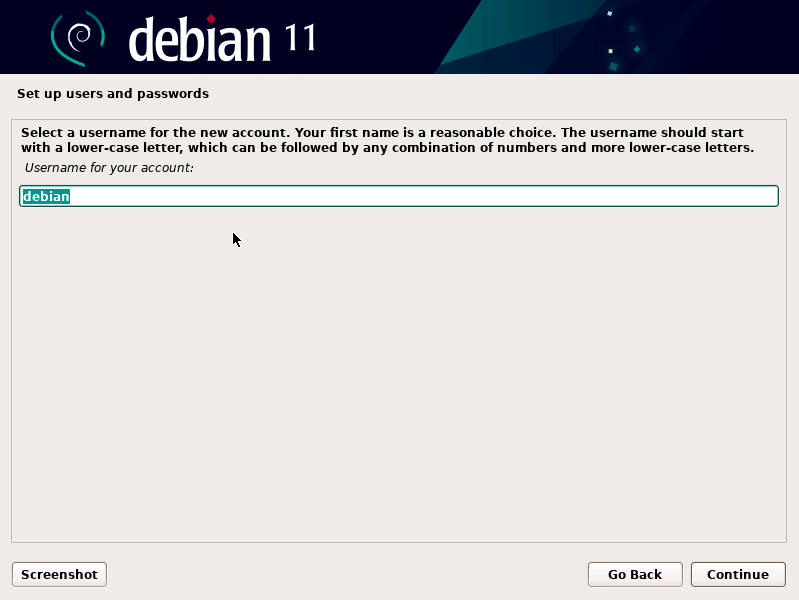
Enter Full name: debian
Enter Username: debian
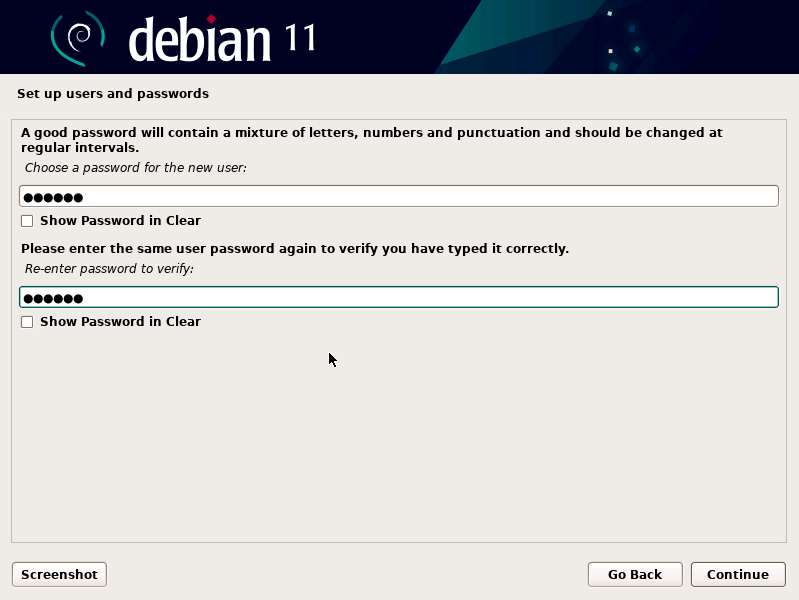
Enter Password: debian
Select your Time Zone
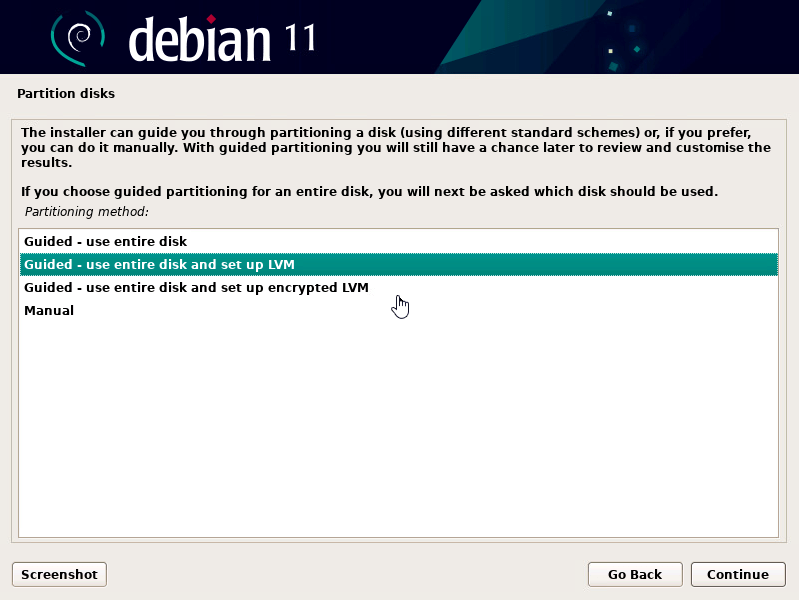
Select “Guided – user entire disk and set up LVM”
Select your disk (sda)
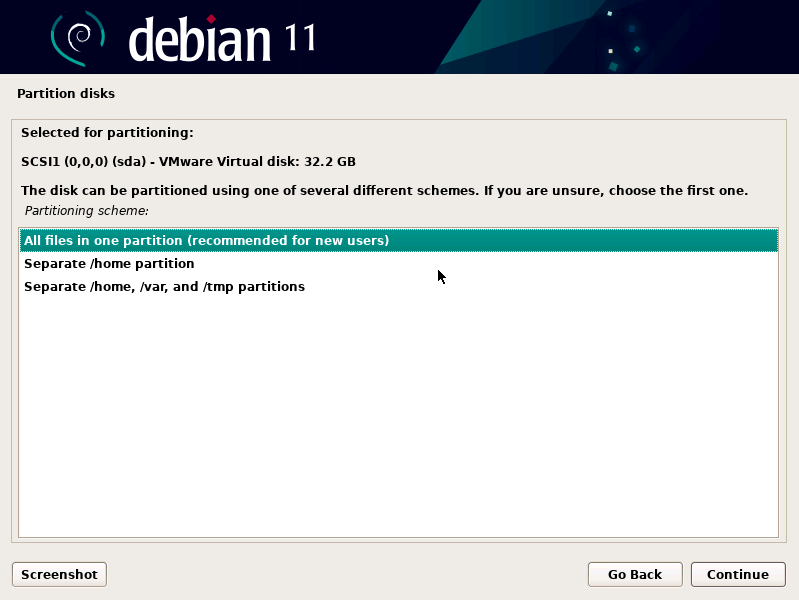
Select “All files in one partition”
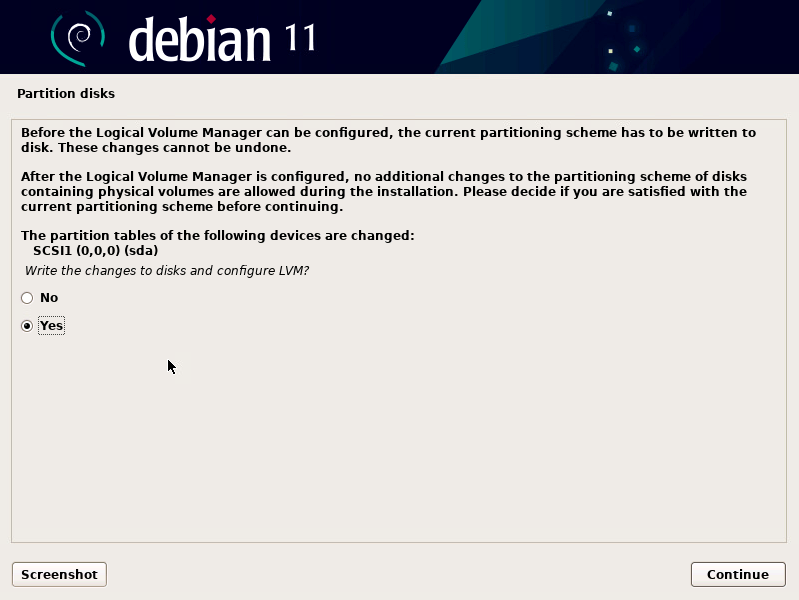
Select “Yes” under “Write the changes to disks and configure LVM”
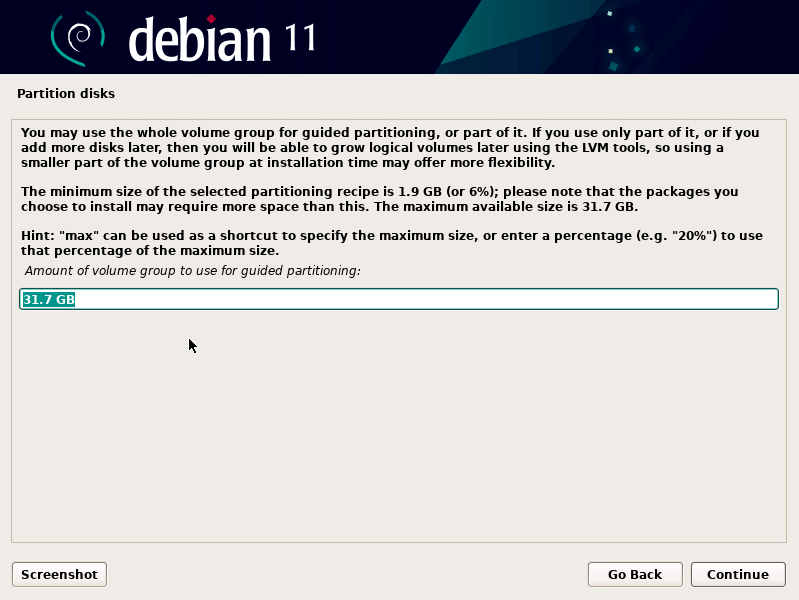
Accept the default size (should be the entire drive) or enter “max”
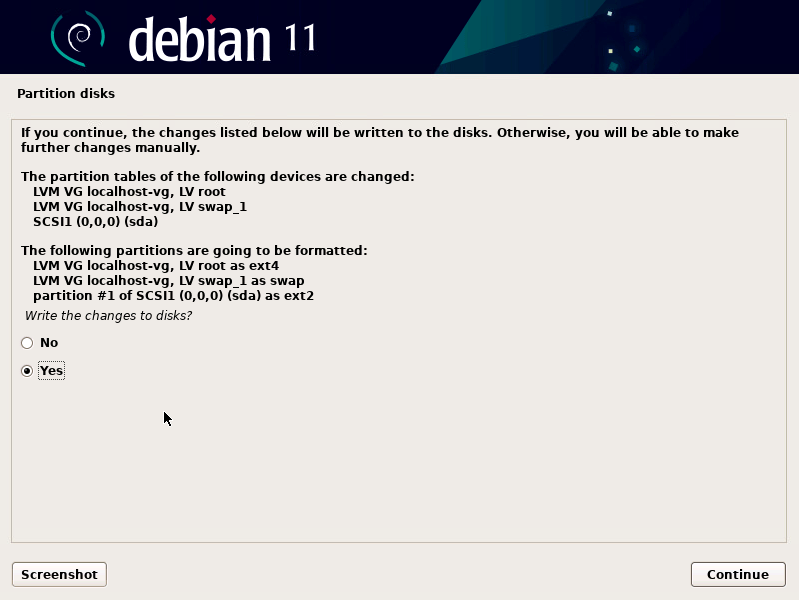
Select “Yes” under “Write the changes to disk”
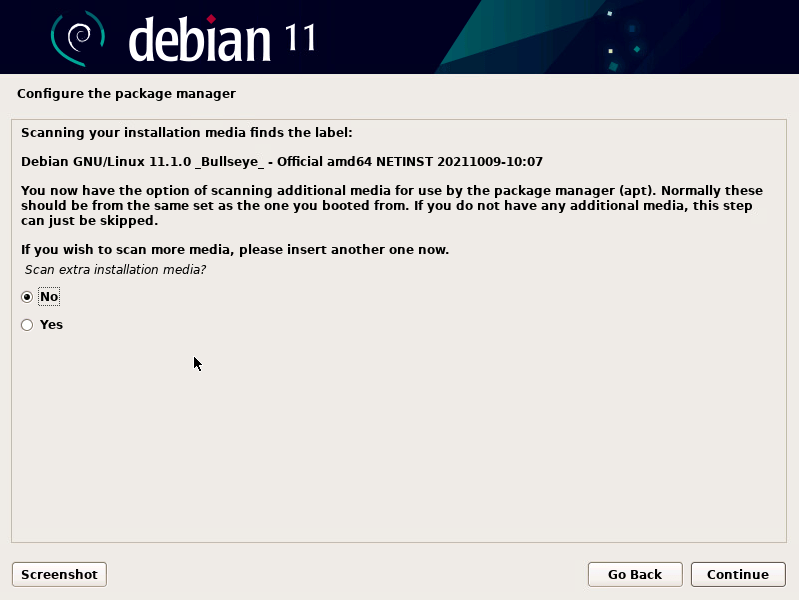
Select “No” under “Scan extra installation media”
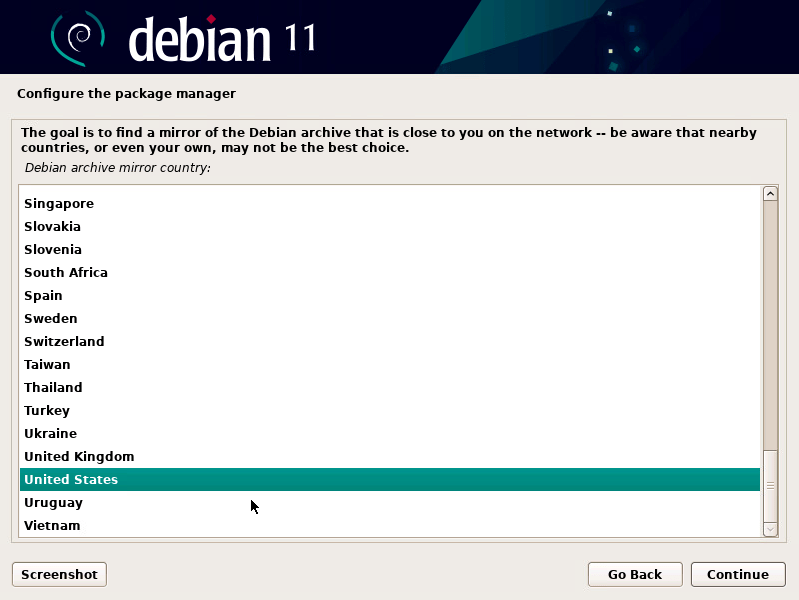
Select United States (or your country)
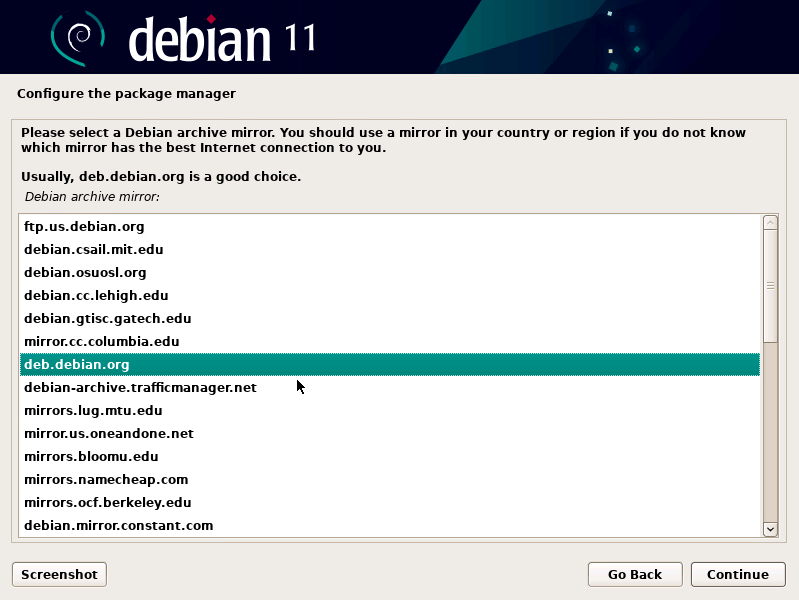
Select default mirror (or mirror of your choice)
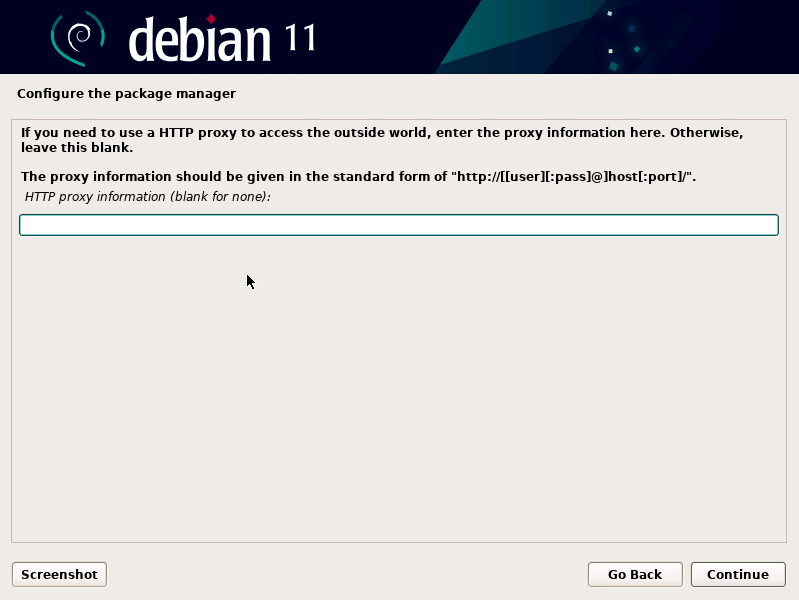
Leave proxy blank
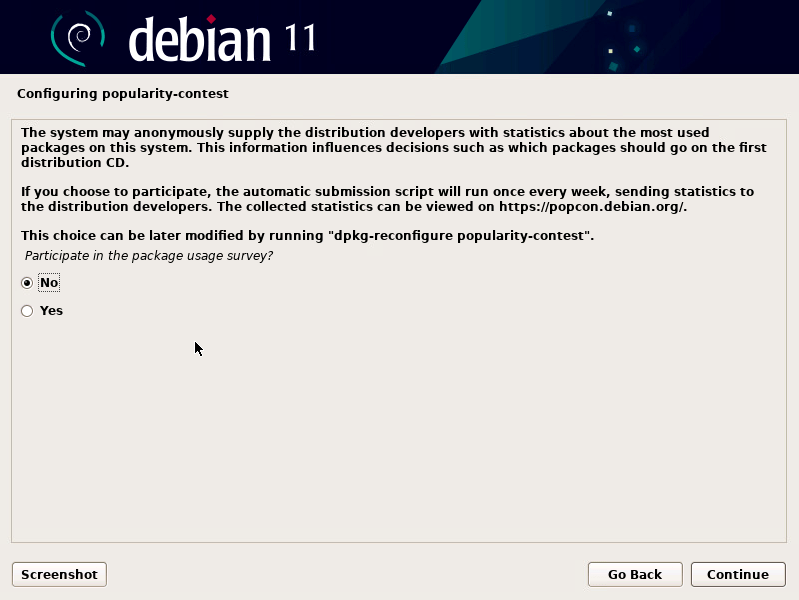
Choose the Package Survey option which works for you:
“No” if privacy is a concern or for production
“Yes” to provide feedback to developers in non-production/home lab environments
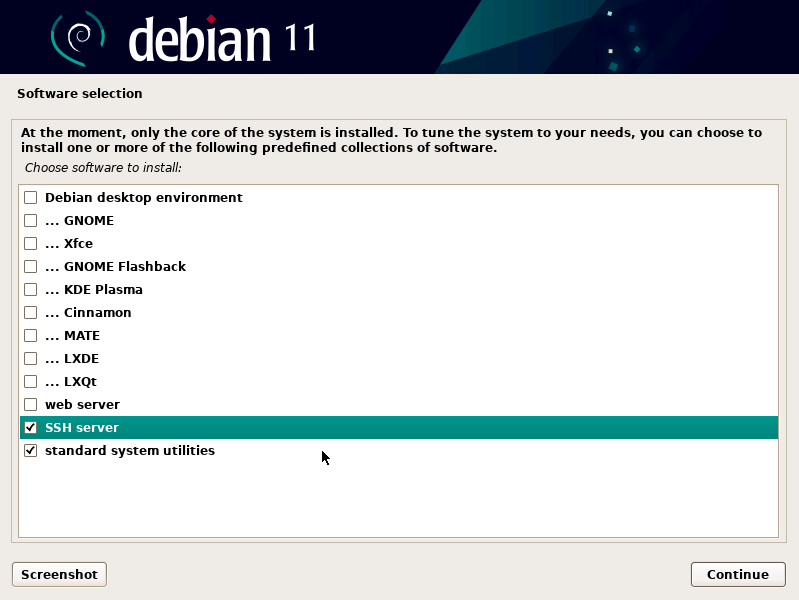
Software selection screen:
Remove: Debian Desktop Environment, GNOME
Select: SSH server (standard system utilities should be selected by default)
Select “Yes” under “Install the GRUB boot loader to your primary drive?””
Select your primary drive (/dev/sda)
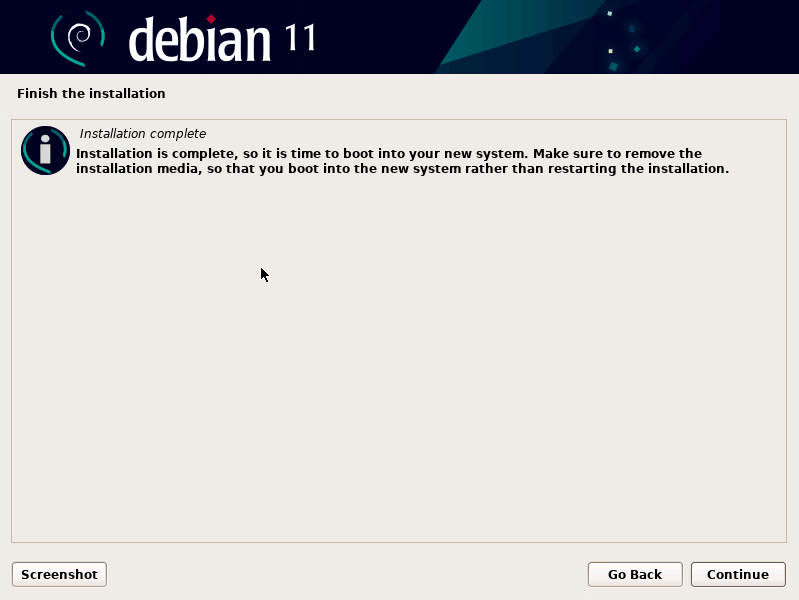
Once you reach the “Installation Complete” screen, return to ESXi/vCenter and revert the Virtual Machine’s CD/DVD drive to “Client Device”
Return to the Virtual Machine console and click “Continue”
Update and Generalize the VM
Debian 11 is now installed on your Virtual Machine.
After a few moments the system will start up and prompt you for a username and password – use the credentials we set up during install (user: debian / pass: debian)
Run this command to get your server’s IP address:
ip address
Output of “ip address” command
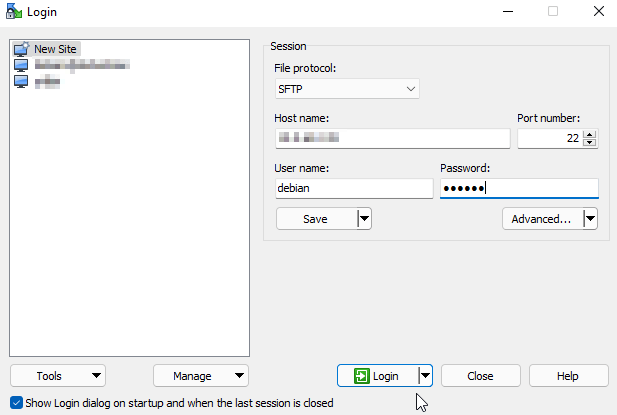
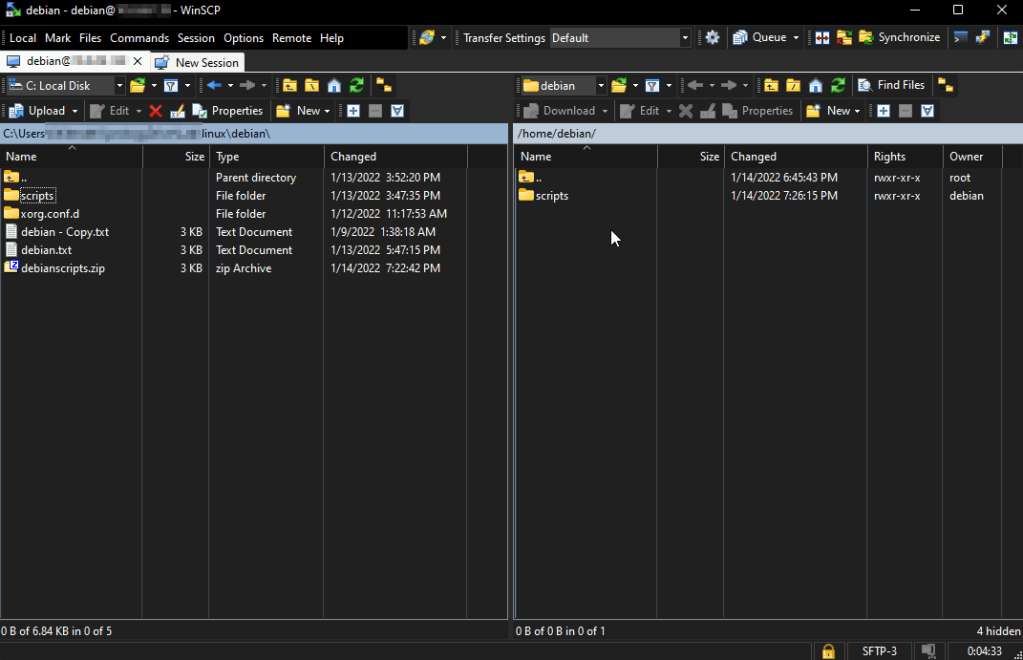
Open your SCP client (I am using WinSCP) and enter the following:
Host name: IP Address obtained above
User name: debian
Password: debian
Select “Yes” when prompted to accept the host key
Screenshots of SCP Process
Download and unzip the “scripts” folder to your computer from the following link:
Disclaimer: These scripts are not meant to be run on existing Linux installations and may have unpredictable or undesirable behavior in those environments. Scripts are provided as-is with no implied warranty. As with any script or automation, it is recommended you review the contents and familiarize yourself with what each script does. There is also an outline of the functions of each script included in the “Extras” section below.
Use SCP to transfer the “scripts” folder to the home directory on your VM (/home/debian)
The scripts folder contains 4 files:
readme.txt
debian-prep.sh
gui-debian-prep.sh
updates.sh
readme.txt (cat ~/scripts/readme.txt) provides descriptions and instructions for updates.sh and gui-debian-prep.sh
debian-prep.sh is the first script we will run and prepares the VM to be used as a template.
gui-debian-prep.sh is an optional script which installs a Desktop Environment/GUI (Graphical User Interface) it should only be run *after* deployment, not as part of templating
updates.sh updates the server operating system and installed packages
Return to the VM console and run the following commands:
* Machine-ID is generated if missing at boot. This should be unique for each VM, and must be cleared again (Re-Generalize instructions below) if template is booted up for future updates ** At first boot, user “debian” will need to set a new password. This is forced for security purposes
What does gui-debian-prep.sh do?
Updates the operating system and packages
Installs Xfce4 desktop environment and additional plugins
Installs graphical text editor (Geany) and web browser (Firefox)
Removes unnecessary packages
Reduces default workspaces (virtual desktops) from 4 to 1
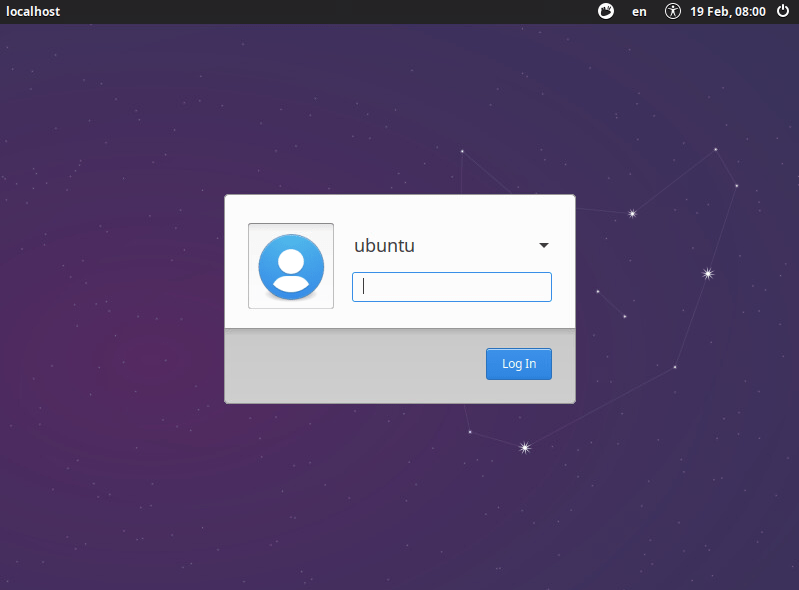
Sets up Greeter (login screen) to mimic look and feel of Xubuntu (official Ubuntu Xfce4 distribution)
Removes unnecessary icons from panel (taskbar) and mimics look and feel of Xubuntu
Self-deletes and reboots server to complete install
How to Re-Generalize the Template
If you need to boot the template to perform updates or make other changes, you will need to Re-Generalize to prevent Machine-ID overlaps and remove any sensitive command history. Once you are finished with your changes run the following commands before converting back to template:













 Tech Projects